Beyond the Download: Embroidering Christmas Day
When a design arrives as a digital download, it’s just an idea on a screen. The real test begins when you put it in the hoop. Today, I’m looking at 25 December Svg, Christmas Day Svg not as a file, but as a potential embroidery project. Let’s talk about what this design actually becomes when stitched out on fabric, and where it shines or needs careful handling.
The Silent Mood of a Holiday Design
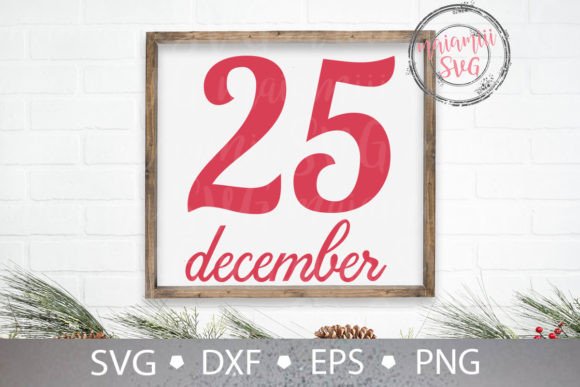
The first impression here is clean and classic. The phrase “Christmas Day” paired with “25 December” creates a straightforward, celebratory statement. It feels traditional rather than whimsical, which gives it a certain dignity. This isn’t a playful reindeer scene; it’s a clear, confident declaration of the holiday. That visual personality makes it incredibly versatile for giftable and commercial embroidery projects. I immediately picture it on a nice cotton pillow cover for a hostess gift, or crisply stitched onto the corner of a linen tea towel for a boutique holiday collection.
Where This Design Finds Its Home
In practical use, this embroidery file is a strong candidate for projects where clarity and recognition are key. Think of a custom embroidered sweatshirt for a family gathering—the text is instantly understood, making it a personal yet universal keepsake. For small business owners, it’s perfect for seasonal merchandise: tote bags, aprons, or simple patches that can be applied to various items. The layout suggests it would work well as a central, focused motif rather than a scattered decorative element.
I specifically tested a mental scenario: creating a set of personalized holiday kitchen towels for an Etsy shop. Using this design, the straightforward text would stitch out cleanly on terry cloth with proper stabilizer, offering a product that feels handmade yet professional. For baby clothes or nursery decor, like a blanket’s corner, the design’s classic nature could be sweetly sentimental, though scale becomes crucial.
When Scale and Fabric Texture Matter
This is a text-based Graphics design, which means its success hinges on stitch clarity. On a curved surface like a cap, the longer lines of “Christmas Day” could present a slight challenge if not properly digitized for that curvature—always test on scrap fabric first. On stretchy fabrics like t-shirts, a dense fill stitch in the letters could lead to puckering; a lighter running stitch outline might be a safer adaptation.
The potential pitfalls are typical for any text design: tiny lettering or intricate serifs if they exist. On dark fabric, the thread color contrast must be high to maintain the design’s dignified feel—a white or metallic thread could look stunning. For items like aprons or tote bags that see frequent washing, a robust satin stitch or a tight fill will ensure the design holds its visual appeal over time, which directly affects customer trust in your handmade product.
Turning a File into a Valuable Product
How does this SVG affect the final product’s value? For a crafter making gifts, its clear theme enhances the giftability—it’s easily understood and appreciated. For an apparel decorator or small shop owner, it offers a recognizable, seasonal design that can be produced consistently, aiding brand consistency across a holiday line. In a competitive craft fair environment, a well-embroidered tote bag with this crisp design stands out through its professional execution, not just its idea.
The craft business angle is important. Using this as a base for commercial embroidery projects means you’re offering a finished product with inherent holiday appeal. It engages buyers looking for specific Christmas Day items, whether for personal use or as resale merchandise. However, its success is entirely dependent on your embroidery skills and choices—the file is the blueprint, but your thread, fabric, and stabilizer are the building materials.
A Designer’s Practical Checklist Before Hooping
Before you run this machine embroidery design, here’s my realistic advice:
- Always test on scrap fabric first. Use the same material and weight as your final project. Check for any thread breaks or overly dense areas.
- Review stitch density in your software. Look at the paths for “25 December” and “Christmas Day”. Are they suitable for your chosen fabric? A dense design on a thin baby bib might be too stiff.
- Confirm your hoop size can accommodate the design’s width and height. You need clean margins for stability.
- Inspect the small details. Are there any minute corners or closed loops that might not stitch cleanly? Adjust if necessary.
- Test it in black and white mockups. View it on both light and dark backgrounds in your software to plan thread colors.
- Use the proper stabilizer. This is non-negotiable for maintaining clarity, especially on textured fabrics like towels or stretchy fabrics like sweatshirts.
- Check the licensing terms provided with the download. This is crucial. Confirm whether the file is cleared for personal use, commercial embroidery projects, or even resale as a digitized product. Never assume.
The Final Stitch: A Design for Conscious Creation
The 25 December Svg, Christmas Day Svg is a solid, thematic foundation. In the Crafts world, it’s a graphic with clear purpose. Its value isn’t in fantastical complexity, but in its straightforward, executable nature for holiday projects. It asks you, the maker, to bring the craftsmanship. Will you stitch it in a bold red on a neutral canvas apron for a sharp look? Or in a soft white on a heather gray baby blanket for a subtle touch? That decision—and your skill in translating the digital file into physical stitches—determines the real outcome.
For the embroidery designer, small business owner, or hobbyist creating a personalized gift, this design serves as a reliable starting point. It won’t surprise you with hidden difficulties if you prepare properly, and it will likely result in a finished product that feels appropriately festive and professionally made. That’s the practical goal: a design that supports your work, not one that complicates it. So download it, open it in your software, but then start thinking about fabric, thread, and the real project it will become.