A Guinea Pig Christmas Tree Lights Embroidery Review
Whenever I open a new design for a potential project, my first question is always: will this hold up on the needle? Not just as a cute image on a screen, but as a physical, stitched piece. Today, I’m looking at the Guinea Pig Christmas Tree Lights graphic from the perspective of an embroidery designer ready to put it into real work.
The Immediate Charm & Where It Belongs
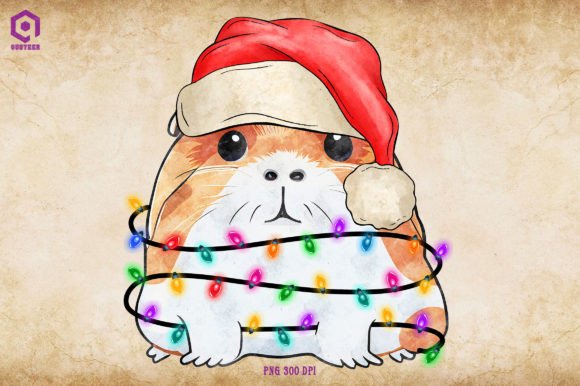
The first impression of this design is pure, whimsical festivity. It’s not a generic snowflake or a stern reindeer. The guinea pig draped in lights creates a specific, joyful mood. It’s playful, a little quirky, and warmly nostalgic. The layout feels balanced and the detail level seems thoughtfully restrained for embroidery—the tree lights are clear loops, the guinea pig’s shape is soft and defined. This isn’t a hyper-realistic portrait; it’s a graphic with personality. That personality tells me it naturally belongs on personalized gifts, holiday-themed apparel, and boutique small shop merchandise. I can already picture it on a cozy sweatshirt for a pet lover or as a sweet detail on a child’s holiday apron.
A Practical Scenario: Crafting a Holiday Tote Bag
Let’s walk through a real case. Imagine I’m preparing a custom embroidered tote bag for a craft fair. I want a design that’s festive but stands out from the usual slogans. Guinea Pig Christmas Tree Lights comes to mind. The challenge here is scale and fabric. A tote bag often has a larger, textured surface. The design’s clear, chunky shapes should translate well, avoiding the risk of tiny details getting lost in the weave. I’m thinking the guinea pig’s face and the bulb shapes will need clean satin stitch or a solid fill stitch to pop against the bag’s background. The overall feeling is one of handmade charm rather than mass-produced slickness, which is perfect for an Etsy seller’s audience.
Performance Across Real Embroidery Projects
This design’s versatility is intriguing. For baby embroidery on a romper or blanket, its soft animal theme is ideal. Stitched small and with bright thread, it becomes a darling nursery decor accent. On a custom apparel like a sweatshirt, it offers that conversation-starting charm that engages buyers. As an embroidered patch, it could be fantastic—the defined edges and central motif are patch-ready. For home goods, think pillow covers or kitchen towels; it adds holiday cheer without being overwhelming.
In a craft business context, using it for holiday embroidery on products like caps or aprons can create a cohesive, thematic line. Its appeal is specific: it will resonate strongly with animal lovers and those seeking an alternative to traditional holiday iconography. That specificity can actually boost customer trust and perceived value—it feels like a thoughtful, unique choice, not a stock image.
Spots Where This Design Requires Careful Handling
No design is universal. Here’s where I’d proceed with caution. On very small hoop sizes, those Christmas light strings and the guinea pig’s finer features could become cramped, risking stitch clarity. Embroidering on stretchy fabric or thin fabric without the right stabilizer might distort those clean curves. If applied to dark fabric, the thread color choice becomes critical—you’d need bright, contrasting colors to maintain the light, cheerful mood. Stitching onto curved surfaces like caps means checking the design’s orientation and density to ensure it sits well on the curve. And for products destined for frequent washing, like baby clothes, evaluating the stitch density for durability is key.
Impact on Your Work & Your Client’s Experience
From a professional standpoint, using a design like this affects more than just the stitch. It influences visual appeal and giftability. A well-executed version of this on a product tells a story—it shows a maker understood a niche audience. That builds brand consistency for a creative entrepreneur focused on playful, animal-themed goods. For the end customer, it’s highly recognizable and engaging, often prompting that “oh, how cute!” reaction that drives sales. It elevates a simple handmade product from a generic holiday item to a personalized treasure.
Essential Designer Notes Before You Hoop It
Before I commit this embroidery file to any client project or my own merchandise, my checklist is practical. First, test the design on scrap fabric that matches my final product’s texture. This reveals how the stitch density behaves and if any small details blur. I’ll check thread color contrast meticulously, especially if moving from a white digital mockup to a colored fabric. I must review hoop size compatibility—the design’s proportions need a hoop that accommodates its width and height comfortably.
It’s wise to test it in black and white mockups to understand its form without color influence, and compare light and dark fabric backgrounds in a digital preview. Always use proper stabilizer for the chosen fabric; a design with defined shapes like this can puckered without support. Crucially, since this is categorised as Illustrations and Graphics, I need to confirm licensing before selling finished items or using it in commercial embroidery projects. The product description doesn’t specify this, so that’s a step I cannot skip.
Finally, I consider its application. Will it work as a stand-alone piece on a tote bag, or as a clustered element on a blanket? Does the machine embroidery design allow for easy resizing without losing integrity? These are questions I answer through a test stitch, not assumption. A design like Guinea Pig Christmas Tree Lights has undeniable charm. Its real value, however, is proven only when the needle hits the fabric and the final, stitched product emerges with the same warmth and clarity as the preview on my screen.